What Is a Currency Pair? How to Read Bid, Ask and Spread
Learn how Base/Quote currency pairs work, how to read Bid and Ask prices, and why Spread is a trading cost, with a worked EURUSD example.
This article was compiled automatically from the sources listed below
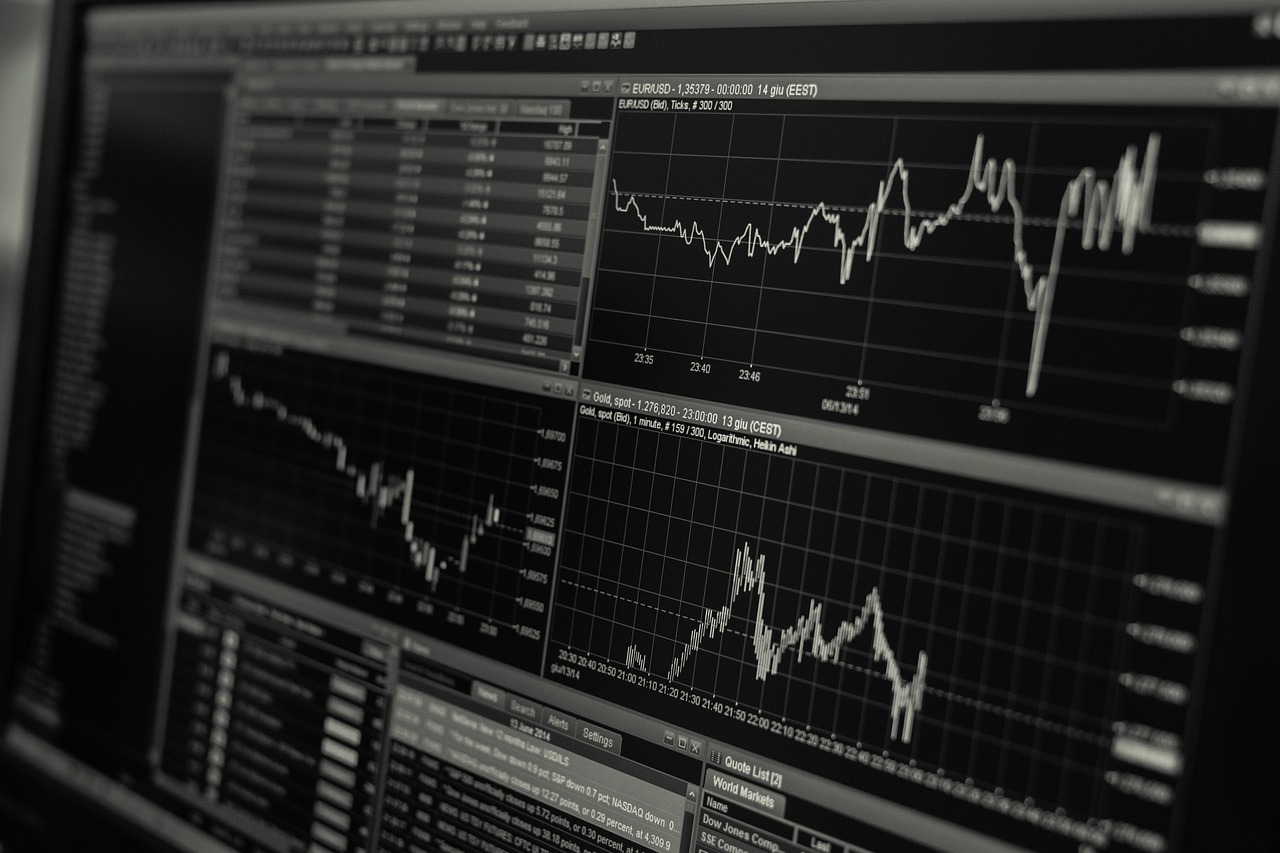
If you have ever opened a forex trading app, you have seen codes like EURUSD or USDJPY followed by two numbers. Many people get confused: which one is the buying price, which one is the selling price, and why are the two numbers different? This article explains it step by step.
What Is a Currency Pair?
In the forex market, we never trade "a single currency" on its own. We always trade one currency against another, which is why it is called a "currency pair."
For example, EURUSD compares the value of the euro (EUR) with the US dollar (USD).
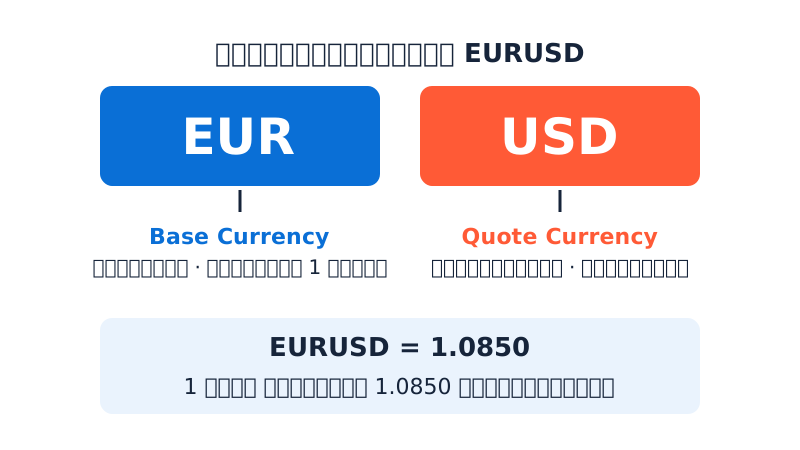
Base Currency and Quote Currency
A currency pair code has 6 letters, split into 2 parts:
- The first 3 letters = Base Currency. This is the currency we always treat as the "unit" of 1.
- The last 3 letters = Quote Currency. This is the currency used to show how much 1 unit of the Base is worth.
If EURUSD = 1.0850, it means 1 euro is worth 1.0850 US dollars.
Here is a simple calculation: if you exchange 1,000 euros at 1.0850, you get 1,000 × 1.0850 = 1,085 dollars.
Gold (XAUUSD) is read the same way: it shows how much 1 ounce of gold (Base) is worth in dollars (Quote).
What Does It Mean to Buy and Sell a Currency Pair?
- Buying EURUSD = buying euros while selling dollars. You do better when the euro gets stronger against the dollar.
- Selling EURUSD = selling euros while buying dollars. You do better when the euro gets weaker against the dollar.
You can trade in both directions in this market, but the price can move either way, and no one knows for sure in advance.
What Are Bid and Ask, and Which Price Do You Trade At?
A trading screen usually shows 2 prices at the same time:
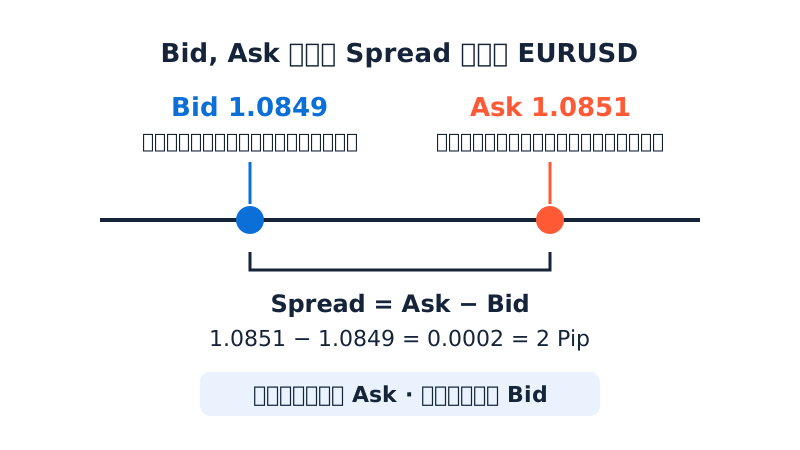
- Bid is the price at which the provider "buys" from you. When you sell, you sell at the Bid price.
- Ask (sometimes called Offer) is the price at which the provider "offers to sell" to you. When you buy, you buy at the Ask price.
An easy way to remember it: buy at the Ask, sell at the Bid, and the Ask is always higher than the Bid.
Suppose the middle price of EURUSD is around 1.0850. Your screen might show:
- Bid = 1.0849
- Ask = 1.0851
If you press buy, you get the price of 1.0851. If you press sell, you get the price of 1.0849.
Pip and Spread
A Pip is the most commonly used unit for measuring the smallest price change. In most pairs, 1 Pip = 0.0001 (for pairs with the Japanese yen as the Quote, such as USDJPY, 1 Pip = 0.01).
Spread is the difference between the Ask and the Bid:
Spread = Ask − Bid = 1.0851 − 1.0849 = 0.0002 = 2 Pips
Spread Is a Cost of Trading
Spread is a fee built into the price, because you always buy at the higher price and sell at the lower price. This means that the moment you open an order, your position starts out "in the red" by the amount of the Spread.
Calculation Example
Using EURUSD Bid 1.0849 / Ask 1.0851 and a trade size of 0.10 Lot:
- 1 standard Lot = 100,000 units of the Base Currency, so 0.10 Lot = 10,000 euros.
- Open a buy at the Ask of 1.0851. The cost in dollars = 10,000 × 1.0851 = 10,851 dollars.
- If the price does not move at all and you close right away at the Bid of 1.0849, you get = 10,000 × 1.0849 = 10,849 dollars.
- The difference = 10,851 − 10,849 = a loss of 2 dollars, which is exactly the Spread.
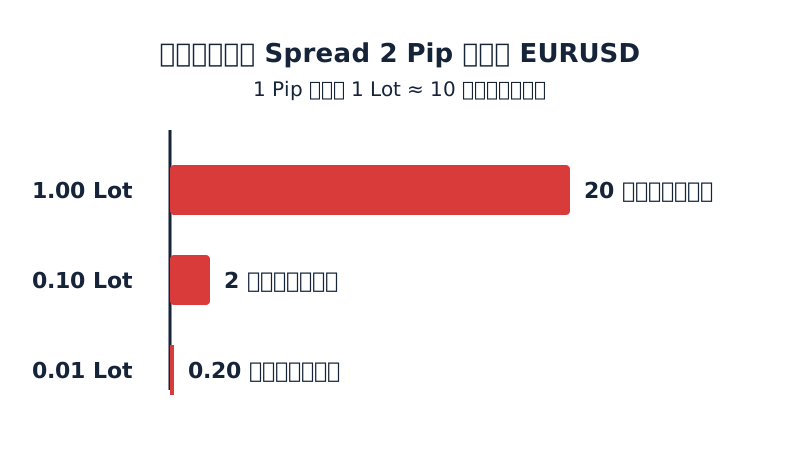
Spread cost by trade size, for EURUSD with a 2 Pip Spread (1 Pip for 1 Lot ≈ 10 dollars):
| Size | Value of 1 Pip | Cost of 2 Pip Spread |
|---|---|---|
| 1.00 Lot | 10 dollars | 20 dollars |
| 0.10 Lot | 1 dollar | 2 dollars |
| 0.01 Lot | 0.10 dollars | 0.20 dollars |
As the example shows, if you buy at the Ask of 1.0851, the Bid price has to rise to 1.0851 before your order gets back to breakeven (not counting other costs your provider may charge, such as commission or overnight holding fees).
The more often you open orders, the more the Spread cost adds up.
Major, Minor and Exotic Pairs
Currency pairs are grouped by how popular they are to trade, which usually relates to the size of the Spread.
- Major Pairs are pairs that include USD and are traded heavily, such as EURUSD, GBPUSD, USDJPY, USDCHF, USDCAD, AUDUSD and NZDUSD.
- Minor (or Cross) Pairs are pairs that do not include USD but are made up of other major currencies, such as EURGBP, EURJPY and GBPJPY.
- Exotic Pairs are pairs that include the currency of a smaller economy or an emerging market, such as USDTHB.
In general, major pairs have high liquidity and their Spread is usually narrower, while minor and exotic pairs usually have a wider Spread. The actual numbers depend on the provider and the time of day, so check the live screen of the account you use.
Risks and Common Mistakes
- Ignoring the Spread because you think 2 Pips is small. If you open orders often or use a large size, the cost can add up a lot.
- Mixing up Bid and Ask, which leads to working out your entry or breakeven point incorrectly.
- Confusing Base and Quote, for example thinking that buying EURUSD means buying dollars, when you are actually buying euros.
- Not knowing the Spread can change. During major news, quiet markets or a new market open, the Spread can get wider than usual.
- Setting a Stop Loss too close without thinking about the Spread. Your order may be closed sooner than you expected.
- Using a Lot size that is too big for you. Forex trading is high risk, and beginners can lose money quickly. Start small and limit the risk on each order.
Summary
- A currency pair compares two currencies. The Base is the unit, and the Quote is the value used to state the price.
- EURUSD = 1.0850 means 1 euro = 1.0850 dollars.
- Buy at the Ask, sell at the Bid, and the difference between these two prices is the Spread.
- Spread is a cost that appears the moment you open an order. The more often you trade, the more it matters.
- Major, minor and exotic pairs differ in how they trade and in their costs.
Before using real money, practice reading prices on a Demo account and work out the Spread of each currency pair yourself. It will help you get more comfortable with the numbers on the screen.
Lesson quiz
Score at least 80% to pass this lesson.
A trading screen shows EURUSD = 1.0850. What does this mean?
You buy EURUSD at the Ask of 1.0851 while the Bid is 1.0849. If there are no other costs, to what level must the Bid price rise for your order to get back to breakeven?
GBPUSD shows Bid 1.2702 and Ask 1.2705. You buy 0.10 Lot, and 1 Pip for 0.10 Lot is worth about 1 dollar. What is the approximate Spread cost of this trade?
What do you do when you buy EURUSD?
Which statement about the Spread is correct?
Ask the AI tutor about this lesson
Stuck on something? Ask and get a simple answer with examples.