How to Choose a Safe Broker: A Beginner's Checklist
Before you deposit money to trade, learn how to check a broker's license, compare account types and costs, test deposits and withdrawals, and spot scam warning signs.
This article was compiled automatically from the sources listed below
Your broker is the first checkpoint in investing. Your money sits with them, and every order you place goes through them. No matter how good your trading plan is, choosing the wrong broker could leave you unable to withdraw your money. This article gathers what beginners should check before depositing real money.
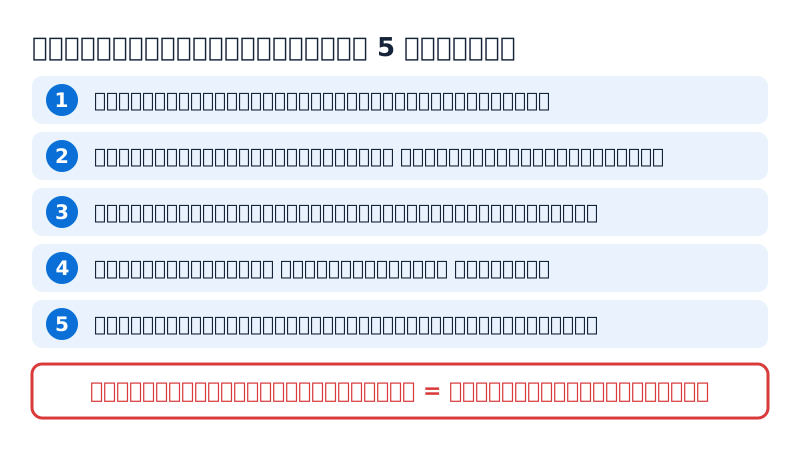
1. Check the License on the Regulator's Website
A line on a broker's website saying "we are licensed" is not enough. Check it yourself with these steps:
- Find the company's legal name and license number. These are usually at the bottom of the web page or on the legal information page.
- Go to the official website of the regulator in the country the broker mentions. Type the web address yourself. Do not click links from the broker or from messages someone sent you.
- Search for the company name or license number in that regulator's database.
- Compare the company name, license type and status (still active or revoked) with what the broker told you.
- Check that the company opening your account is the same legal entity that holds the license, because some brokers have several affiliated companies that are regulated to different levels.
For providers based in Thailand or Laos, you should also check with the capital market regulator of that country. If you can't find the company or the details don't match, treat it as a signal to stop and ask clear questions first.
Besides the license, read the terms on keeping client money separate from company money, and the Negative Balance Protection policy. If the information isn't clear, ask customer support in writing.
2. Understand the Account Types
One broker usually offers several kinds of accounts, which differ in their conditions and how costs are charged.
- Spread-only account: The cost is built into the Spread (the difference between the buy and sell price). There is no separate commission.
- Low-spread + commission account: The Spread is narrower, but you pay a commission per Lot.
- Demo account: Uses play money. It's good for practicing with the platform before you put in real money.
- Low-capital account: Smaller contract sizes, which make it easier to control the risk on each trade.
Before opening an account, look at the minimum deposit, the minimum Lot size and the Leverage level offered. Beginners don't always need to use the maximum.
3. Compare All the Costs
Costs are not just the Spread. Also look at the following:
- Spread and commission
- Deposit and withdrawal fees
- Swap fees when you hold a position overnight
- Inactivity fees on dormant accounts (if any)
Calculation Example
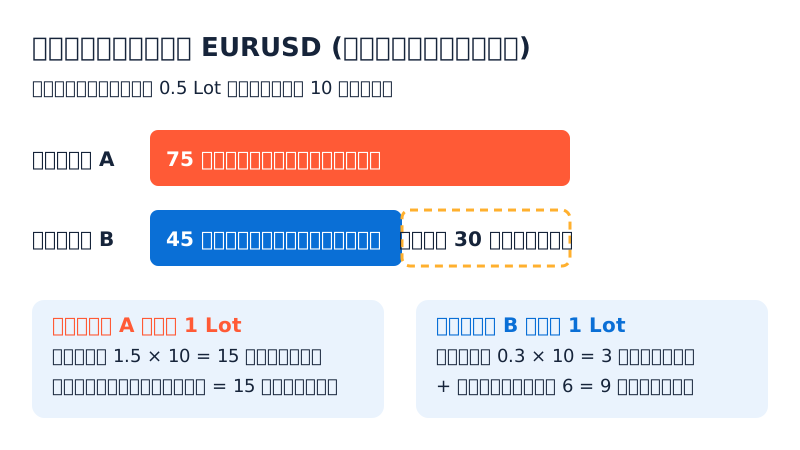
Suppose you trade EURUSD, where 1 Lot equals 100,000 units and 1 Pip equals 0.0001, worth about $10 per Pip per 1 Lot. The numbers below are hypothetical and for learning only.
Account A (spread only): Spread of 1.5 Pips, no commission
- Cost per 1 Lot = 1.5 × 10 = $15
Account B (low spread + commission): Spread of 0.3 Pips and a commission of $6 per 1 Lot (covering both opening and closing the position)
- Spread cost = 0.3 × 10 = $3
- Total cost per 1 Lot = 3 + 6 = $9
If you trade 0.5 Lot at a time, 10 times a month:
- Account A: 15 × 0.5 × 10 = $75 per month
- Account B: 9 × 0.5 × 10 = $45 per month
The $30 monthly difference comes only from the cost structure and has nothing to do with your trading profits or losses. However, real Spreads change with the time of day and market conditions, so you should also look at actual Spreads on a Demo account during the hours when you usually trade.
4. Check the Deposit and Withdrawal System
A broker's safety is usually tested when you withdraw, not when you deposit.
- Check that there are deposit and withdrawal methods you can actually use, and what fees or exchange rates apply.
- Read the processing times and withdrawal conditions, such as the minimum amount.
- Check that the receiving account is in the name of the licensed company, not an ordinary individual's account.
- Normally, withdraw to the same name you deposited from. Be careful if you are asked to transfer to someone else's account.
- Start by depositing a small amount, then try withdrawing part of it to see that the process goes smoothly before you add more money.
5. Scam Warning Signs
If you see any of the following, stop and look into it carefully.
- Guaranteed returns, or ads saying you will "never lose." Every type of investment carries risk.
- Someone contacts you out of the blue on LINE, WhatsApp, Facebook or a dating app, then leads you into investing.
- You're asked to deposit money for a "manager" or "professional trader" to trade for you, without going through an account you control yourself.
- Pressure to deposit quickly, claiming the opportunity will end soon or a promotion is about to close.
- You can't find the license, or the company name doesn't match the regulator's database.
- You can't withdraw and are told to pay extra "tax" or an "unlock fee" first.
- Bonuses with complicated conditions that stop you from withdrawing your real money.
- Fake websites imitating a real company. The web address is often similar but spelled slightly differently.
Risks and Common Mistakes
- Trusting reviews or profit screenshots on social media. These are easy to fake. Don't use them as your only evidence.
- Choosing only on low Spreads or high bonuses, without checking the license and withdrawal conditions.
- Depositing a large sum the first time. Start with an amount you can afford to lose.
- Using too much Leverage, which makes you lose money quickly even if you chose a good broker.
- Not reading the terms and conditions, even though they contain important details about fees, account closure and withdrawal suspensions.
- Sharing your password or OTP code with someone claiming to be staff. A real broker never asks for these.
Even a licensed broker doesn't make investing risk-free. A license helps reduce the risk of the company's operations failing, but it does not protect you from losses on your own trades.
Summary: Checklist Before Opening an Account
- Check the company name and license number directly on the regulator's website.
- Choose an account type where you understand every part of the cost structure.
- Try a Demo account to see the platform and real Spreads.
- Deposit a small amount, then test a withdrawal.
- If you see any warning sign, stop first.
Spending a day or two checking a broker beforehand is better than wasting time later chasing money you can't withdraw.
Lesson quiz
Score at least 80% to pass this lesson.
You want to verify a broker's license. Which approach does the article recommend?
Using the article's example (EURUSD, about $10 per Pip per 1 Lot), Account B has a 0.3 Pip Spread and a $6 commission per 1 Lot. What is the total cost of trading 1 Lot on Account B?
If you trade 0.5 Lot ten times a month, how much cheaper is Account B ($9 per 1 Lot) than Account A ($15 per 1 Lot)?
According to the article, what is the best way to test a broker's safety before adding more money?
A broker is fully licensed. What does the article say this means for your trading?
Ask the AI tutor about this lesson
Stuck on something? Ask and get a simple answer with examples.