What Is Forex, How Does It Work, and Who Trades It?
Learn the basics of the currency exchange market: how many hours it's open, who the main players are, what brokers do, and how it differs from exchanging money for a trip abroad.
This article was compiled automatically from the sources listed below
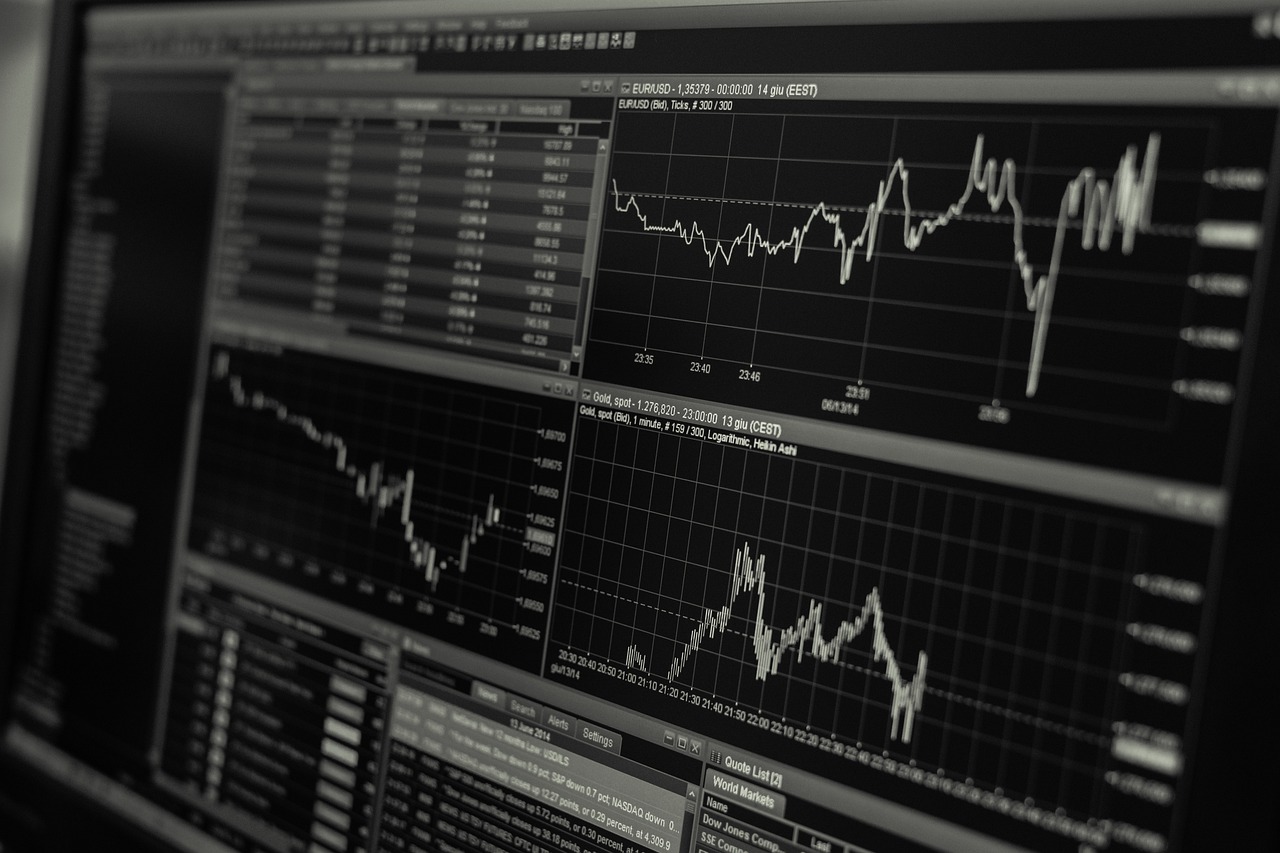
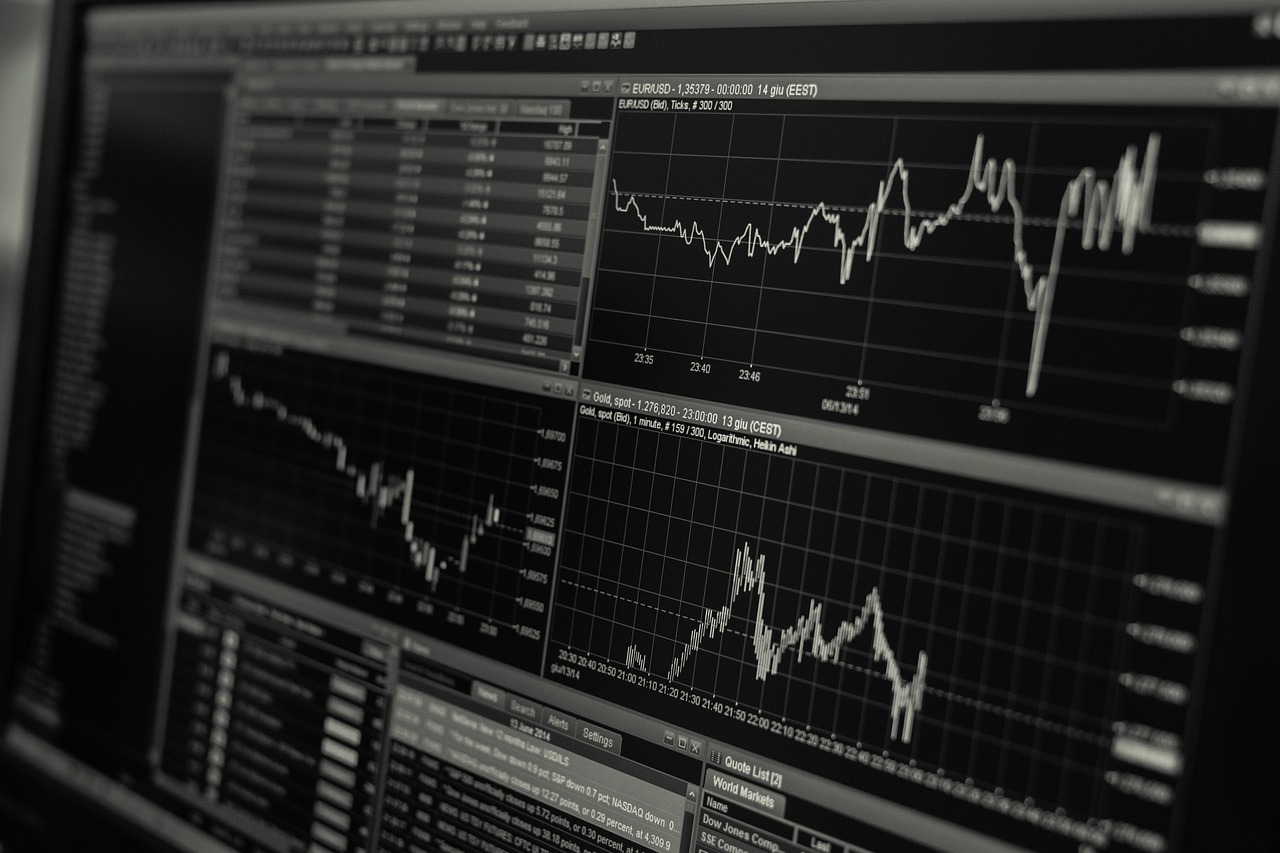
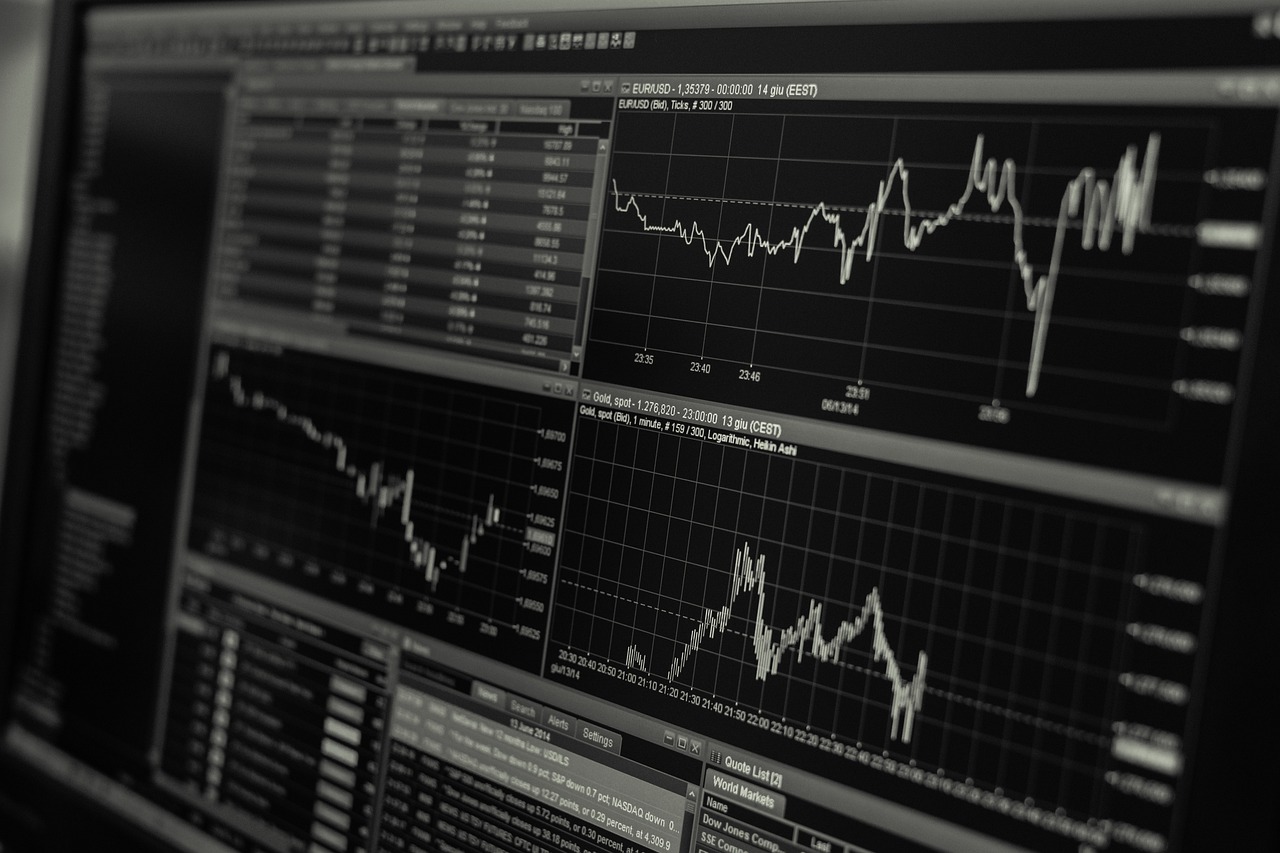
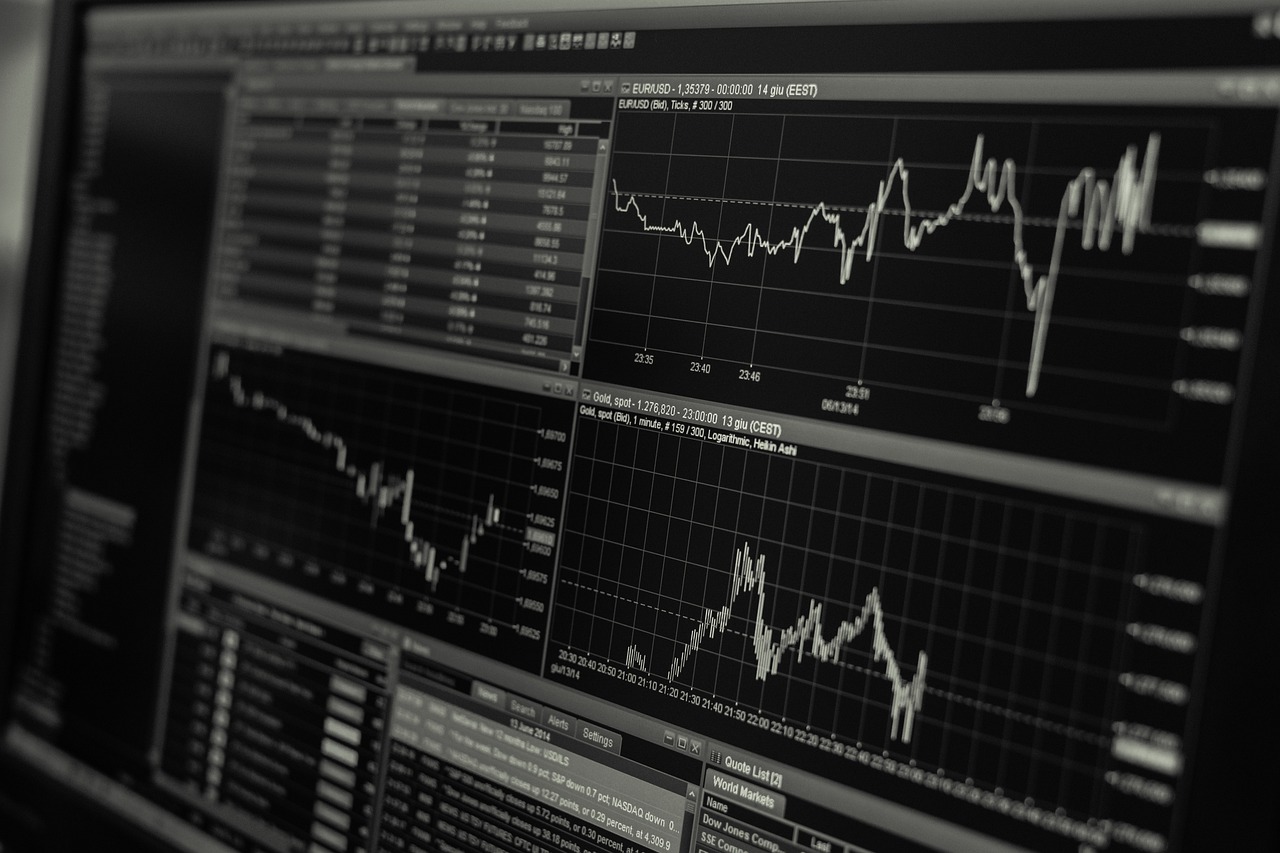
When we travel abroad, we exchange baht for another currency. That is the most familiar form of currency exchange. Forex (also written FX, short for Foreign Exchange) is the huge market where currencies are bought and sold around the world, both for real-world needs and to speculate on price changes.
This article explains the basics so you get the big picture before moving on to other topics.
How Forex Works: You Always Buy One Currency and Sell Another
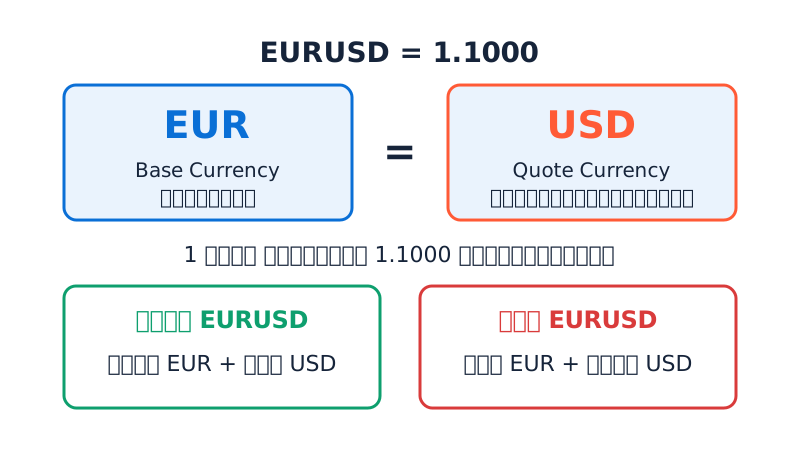
In the forex market, currencies are traded in "pairs." For example, EURUSD is the euro against the US dollar.
- The first currency (EUR) is called the Base Currency
- The second currency (USD) is called the Quote Currency, the one used to state the price
If EURUSD is 1.1000, it means 1 euro is worth 1.1000 US dollars.
Buying EURUSD means buying euros and selling dollars at the same time. Selling EURUSD means selling euros and buying dollars. The price moves with the supply and demand for these two currencies, which is influenced by many factors, such as central bank policy, the state of the economy, and real demand for each currency.
No Central Exchange, and Open Almost 24 Hours
Unlike the stock market, which has a stock exchange at its center, forex is an OTC (Over-the-Counter) market. Trades are agreed through a network of banks and financial institutions around the world. There is no single place where all orders come together.
Because it is a global network, the market runs continuously from Monday to Friday, with trading activity moving between the major financial centers:
- Sydney
- Tokyo
- London
- New York
The market closes on weekends. When two sessions overlap (for example, London and New York), trading is usually busier than at other times. Actual opening and closing times can shift with each country's daylight saving time, so check the schedule on the platform you use.
Who Are the Players in the Forex Market?
There are several groups of players, each with different goals.
- Central banks manage a country's monetary policy and reserves, and sometimes step in to influence their currency's value
- Commercial banks and large financial institutions are the main price makers in the market, taking currency exchange orders from clients and trading with each other
- Businesses, such as importers and exporters, that need to pay or receive money in other currencies
- Funds and investment managers trade to manage portfolios or hedge currency risk
- Retail traders are ordinary individuals who trade through brokers, and make up only a small part of the whole market
- Tourists and people working abroad who exchange money to spend or to send money home
As you can see, many people use this market because they genuinely need foreign currency, not just to speculate.
What Does a Broker Do?
Retail traders cannot access the interbank market directly, so they go through a broker. A broker's main roles are:
- Providing a platform to view prices and place trade orders
- Quoting a Bid price (the price you can sell at) and an Ask price (the price you can buy at)
- Handling order execution and looking after clients' account funds
- Offering Leverage, which lets you trade with more money than the capital you put up, using part of your funds as collateral called Margin
A broker's income usually comes from the Spread (the difference between the Bid and Ask prices) and/or commissions. Before choosing a broker, check whether it is licensed by a reputable regulator, and read the terms on fees and withdrawals carefully.
How Is It Different from Exchanging Travel Money?
Both involve exchanging currencies, but they work very differently.
| Topic | Travel money exchange | Forex trading |
|---|---|---|
| Goal | Real spending | Speculating on price changes |
| Receiving money | You receive actual cash | Mostly numbers in an account; you don't actually receive that currency |
| Direction | Only buying foreign currency | You can buy or sell first |
| Leverage | None | Yes, which magnifies both profits and losses |
| Cost | Difference between buy and sell rates | Spread or commission |
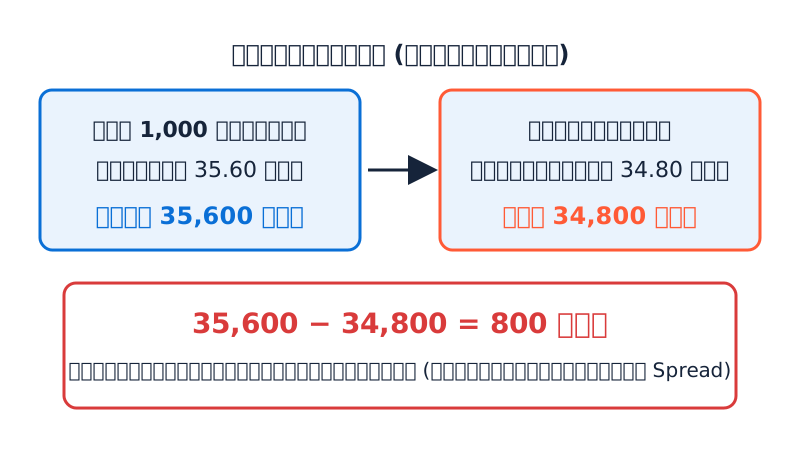
Calculation Example 1: The Price Difference When Exchanging Money
Suppose (hypothetical numbers for learning purposes only) a money changer sells dollars at 35.60 baht and buys them back at 34.80 baht.
- Exchanging 1,000 dollars costs 1,000 × 35.60 = 35,600 baht
- If you change your mind and sell them back right away, you get 1,000 × 34.80 = 34,800 baht
- The difference is 35,600 − 34,800 = 800 baht
This difference is the cost of the exchange. Forex has a similar cost, but it is called the Spread.
Calculation Example 2: Pip and Lot
A Pip is the unit used to measure price changes for most currency pairs, where 1 Pip equals 0.0001. A Lot is the unit of trade size, where 1 standard Lot equals 100,000 units of the base currency.
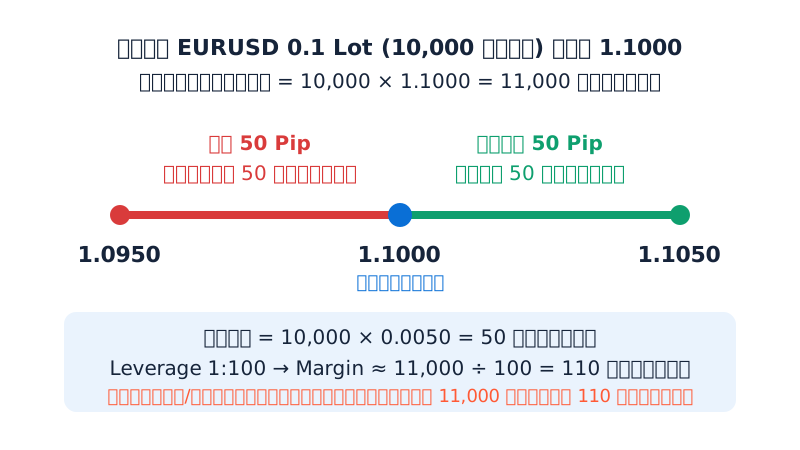
Suppose EURUSD is at 1.1000 and someone buys 0.1 Lot, which equals 10,000 euros.
- Position value = 10,000 × 1.1000 = 11,000 dollars
- If the price goes to 1.1050, it has moved 0.0050, or 50 Pips
- Profit = 10,000 × 0.0050 = 50 dollars
But if the price falls to 1.0950, a 50 Pip move in the opposite direction, the result is a loss of 50 dollars at the same size.
With 1:100 Leverage, opening this position needs a Margin of about 11,000 ÷ 100 = 110 dollars. But remember that profit or loss is calculated on the full 11,000 dollar value, not on the 110 dollars. This example only shows how the calculation works. It does not suggest which way the price will go.
Risks and Common Mistakes
- Using too much Leverage, which makes losses come fast and can wipe out your entire account balance
- Not setting a Stop Loss, or having no plan for how much you are willing to lose per trade
- Expecting fast, certain returns: no one can guarantee profits in this market
- Overlooking costs such as Spread, commissions and other fees
- Trading with money you need, such as money for monthly expenses
- Believing ads or trading signals that promise profits, which deserve extra caution
Summary
Forex is the global currency exchange market, open almost all week, with banks, companies, funds and retail traders all taking part. Brokers act as the middleman that gives ordinary people access to the market, but trading carries much higher risk than exchanging money for a trip. Before putting in real money, make sure you understand Pip, Lot, Spread, Leverage and risk management well, and consider starting with a demo account to see how these numbers work in real situations.
Lesson quiz
Score at least 80% to pass this lesson.
In the pair EURUSD quoted at 1.1000, what does the price tell you?
Why is forex called an OTC (Over-the-Counter) market?
A trader buys 0.1 Lot of EURUSD (10,000 euros) at 1.1000. The price falls to 1.0950. What is the result?
What is the main way forex trading differs from exchanging travel money?
A trader uses 1:100 Leverage and posts about 110 dollars of Margin to open an 11,000 dollar position. Which statement is correct?
Ask the AI tutor about this lesson
Stuck on something? Ask and get a simple answer with examples.