What Are Stocks and How Are They Different From Forex Trading?
A stock is a share of ownership in a company, while forex means trading currencies. See how they differ on dividends, market hours, leverage and risk.
This article was compiled automatically from the sources listed below
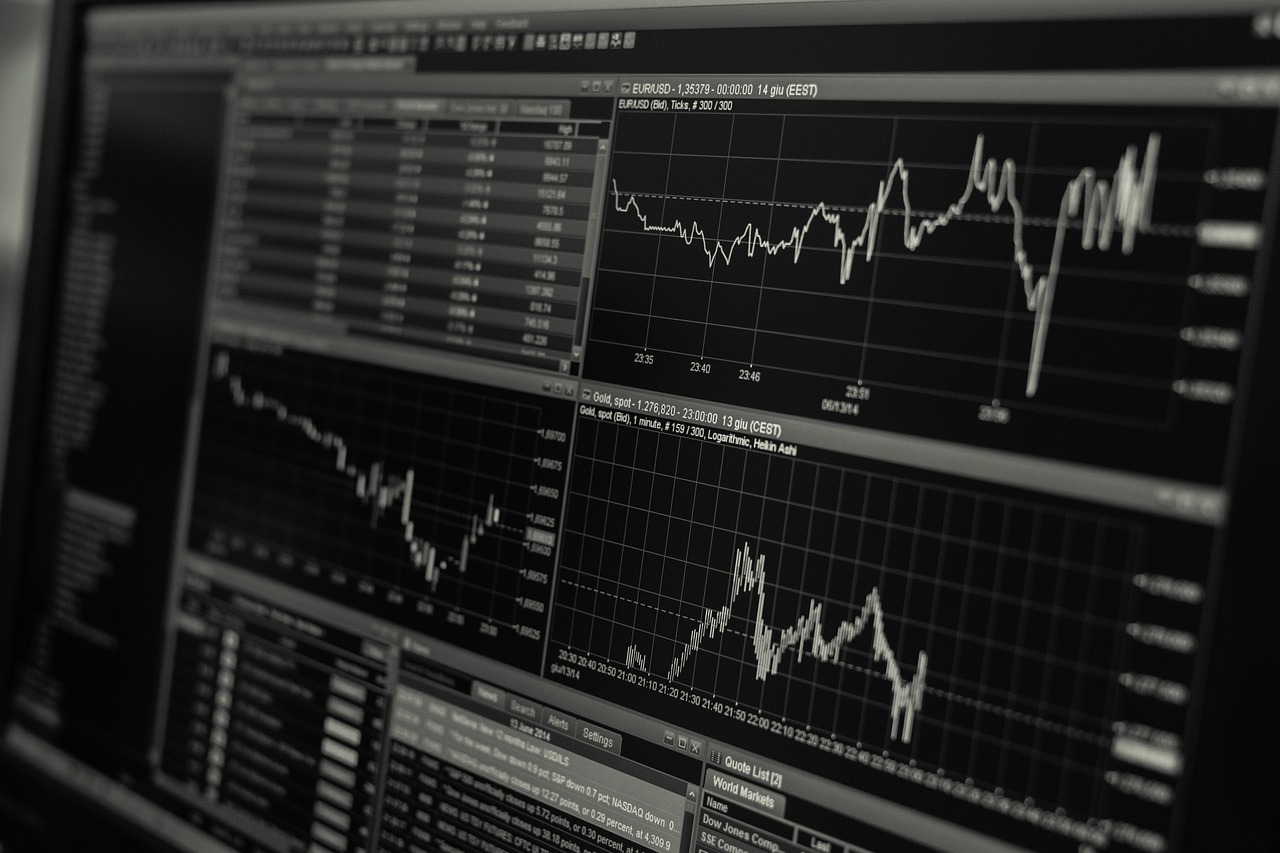
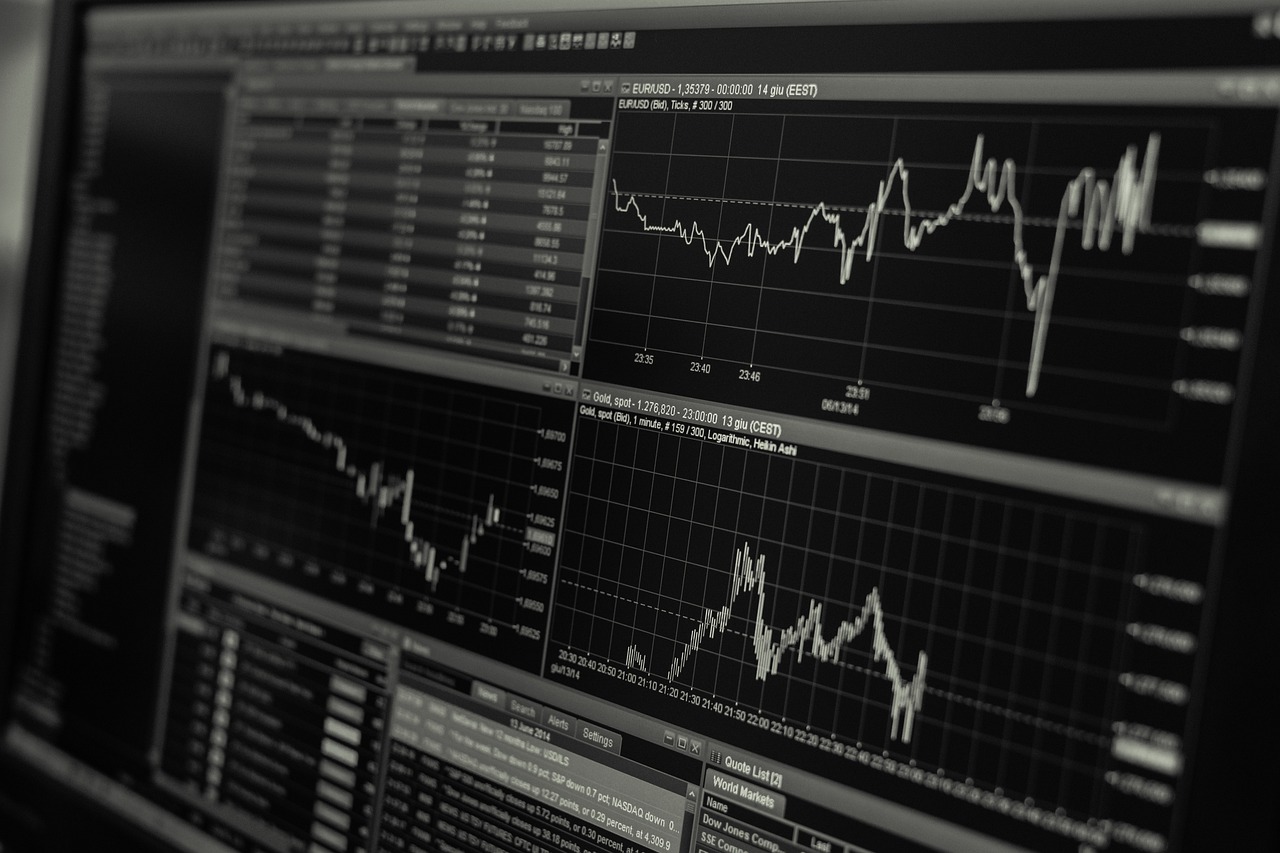
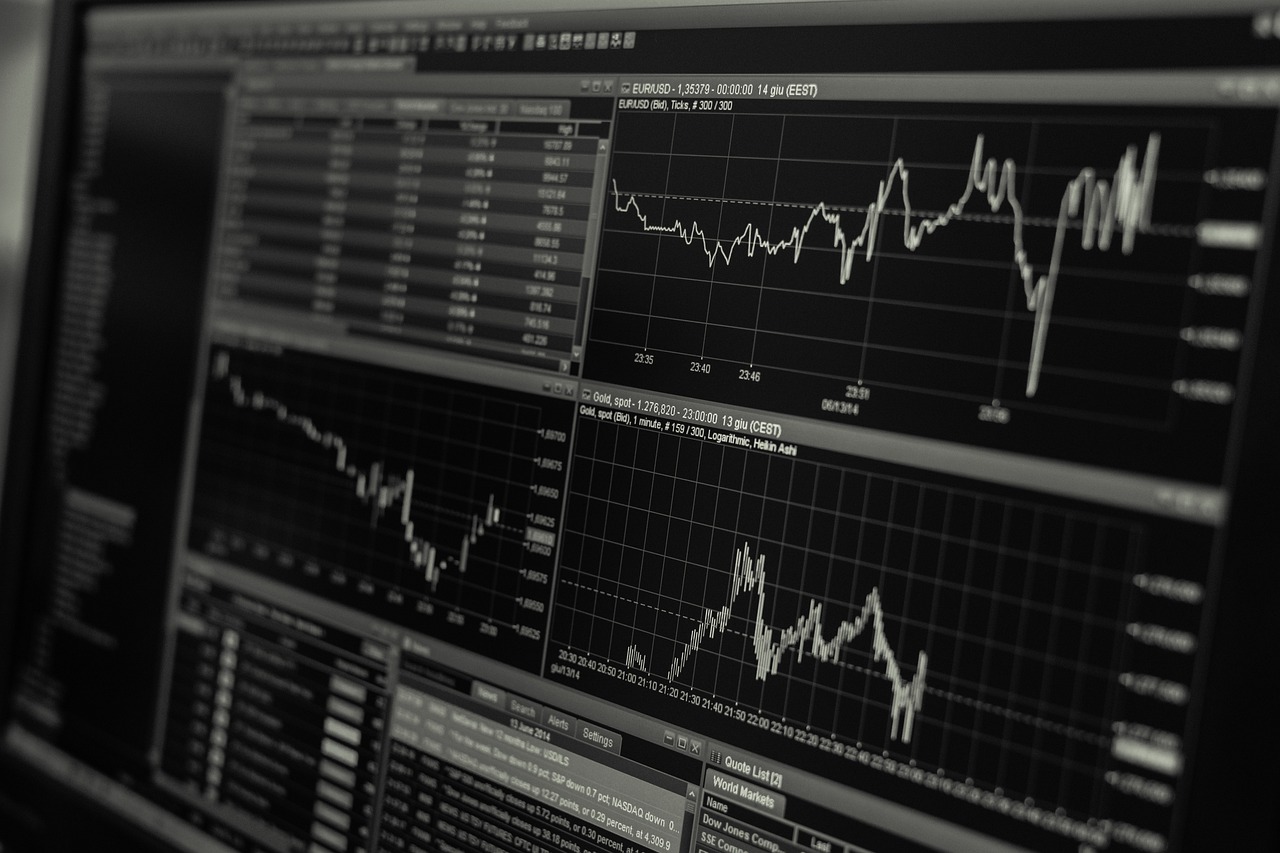
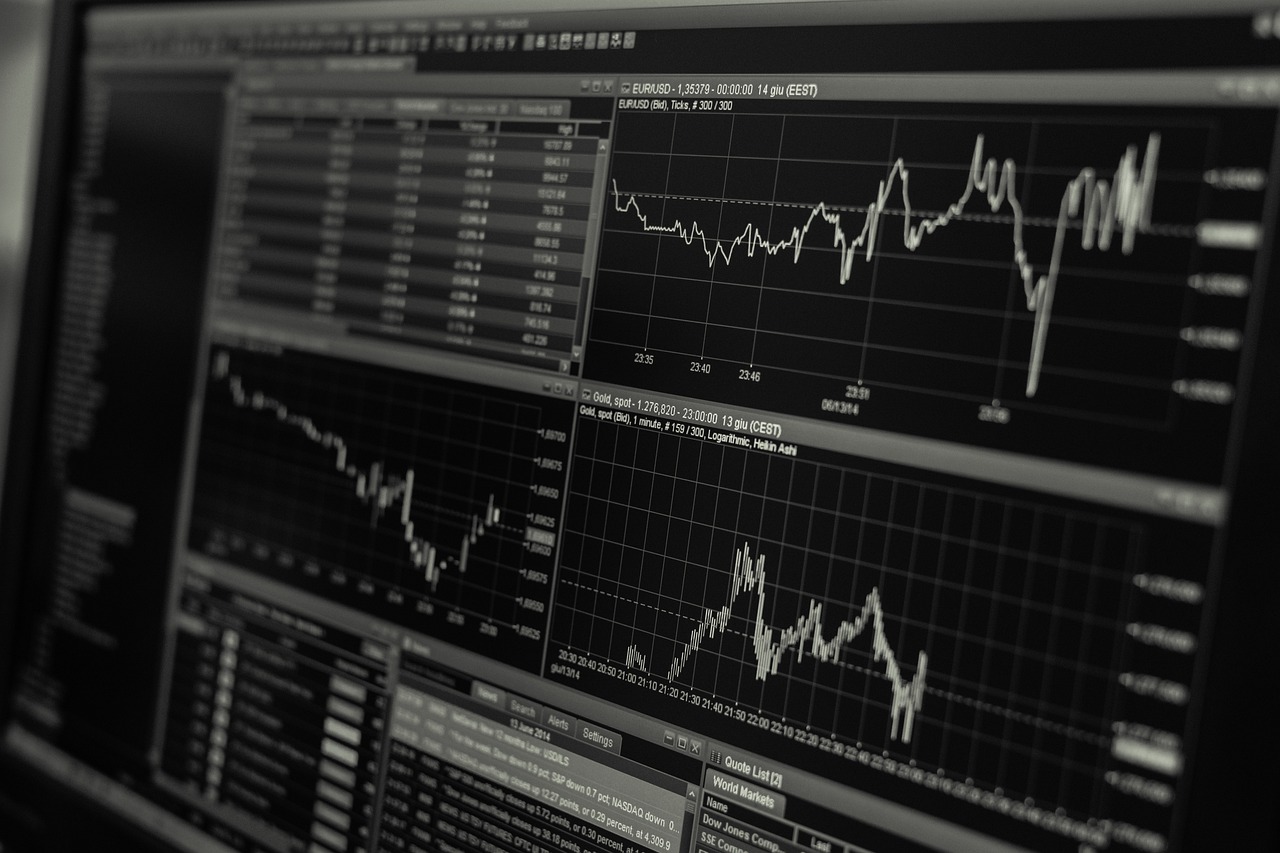
When people talk about investing, "stocks" and "forex" often come up together. Both have prices that move all the time, and both can be traded through an app or a trading platform. But the two markets work quite differently. This article explains what stocks are and how they differ from forex, so you understand the basics before you decide what to learn next.
What Are Stocks?
A stock is a small unit of ownership in a company. When a company wants to raise money to grow its business, it splits ownership into many shares and offers them to investors. A person who holds shares is a "shareholder," or a part-owner of the company, even if the share is very small.
Shares of listed companies are traded on a stock exchange. Stock prices move up and down with buying and selling demand, which reflects what investors think about a company's earnings, business outlook and the overall economy.
Shareholders can earn returns in two main ways:
- Price difference: If you buy at one price and sell at a higher price, you make a profit. If you sell at a lower price, you take a loss.
- Dividends: Some companies share part of their profits with shareholders. But a company is not required to pay dividends, and the amount can change from year to year.
Holders of common stock usually also have the right to vote at shareholder meetings, in proportion to the shares they own.
What Is Forex? (A Quick Recap)
Forex is the trading of currencies against each other. Currencies are traded in pairs. For example, EURUSD is the price of the euro against the US dollar. You don't own any business. You are trading based on changes in the exchange rate between two currencies.
How Are Stocks Different From Forex?
1. What You Hold
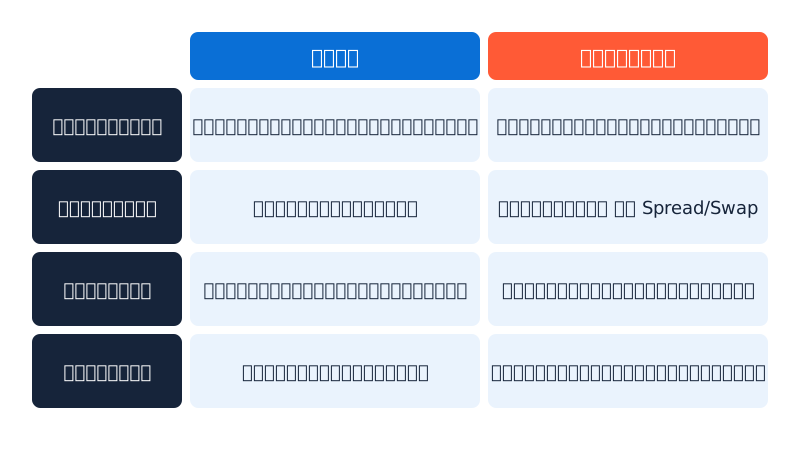
- Stocks: You own a part of a company, and the value is tied to a real business.
- Forex: You trade the difference in currency prices. You don't own any company.
2. Dividends
Some stocks pay dividends, but forex has no dividends. What you meet in forex are costs such as the Spread, and sometimes a Swap fee when you hold a position overnight. These depend on each provider's terms.
3. Market Hours
Stock markets open during set hours on that market's trading days and are closed the rest of the time. Forex stays open for many hours in a row on trading days, because trading moves around the world's financial centers. Because of this difference, a stock price can "jump" over the closed hours when important news comes out.
4. Leverage
Leverage means using a small amount of capital to control a larger position. In forex, using Leverage is normal. Buying stocks the regular way means paying the full amount, unless you choose a service that lets you borrow money to buy, which comes with extra conditions and risks.
5. Trading Direction
In forex, opening a Buy or a Sell position is about equally easy. With stocks, most beginners start by buying and holding. Short selling has more conditions in many markets.
Worked Examples: Seeing the Difference in Numbers
Stock example (hypothetical, not counting fees and taxes)
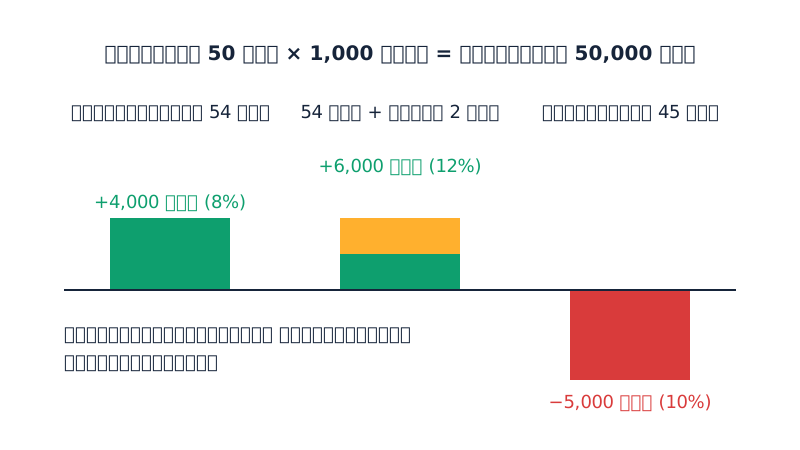
You buy 1,000 shares of a company at 50 baht each, spending 50,000 baht.
- If the price rises to 54 baht: profit is (54 − 50) × 1,000 = 4,000 baht, or 8% of your investment.
- If the company pays a hypothetical dividend of 2 baht per share: you receive 2 × 1,000 = 2,000 baht. Together with the price gain, that is 6,000 baht, or 12%.
- If the price falls to 45 baht: loss is (50 − 45) × 1,000 = 5,000 baht, or 10% of your investment.
If you buy with full cash, the most you can lose is the money you put in, because a stock price can only fall to zero.
Forex example (hypothetical)
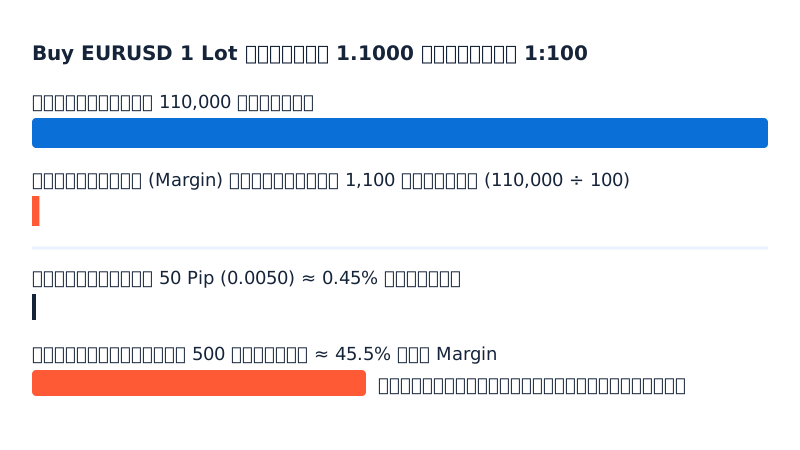
You open a Buy position on EURUSD of 1 Lot (100,000 units) at a price of 1.1000, using 1:100 Leverage.
- Position value = 100,000 × 1.1000 = 110,000 dollars
- Margin required = 110,000 ÷ 100 = 1,100 dollars
- If the price moves 50 Pips (0.0050), then for 1 Lot a Pip is worth about 10 dollars, so the profit or loss = 50 × 10 = 500 dollars.
The 500 dollars is about 45.5% of the 1,100 dollar Margin (500 ÷ 1,100), even though the currency pair's price moved only about 0.45%. You can see that Leverage makes both profits and losses much stronger than the actual price change.
Risks and Common Mistakes
- Thinking stocks are always safe. Stocks are risky assets. Prices can fall a lot, and a company that fails can leave its shares worth very little or nothing.
- Buying because of hype or word of mouth, without learning what the company does and how it earns money.
- Counting on dividends as certain. Dividends can change or be skipped, and a stock's price often adjusts when a dividend is paid.
- Putting all your money in one stock. If something goes wrong with that company, your whole portfolio is affected.
- Using too much Leverage, especially in forex. Losses can happen faster than you expect. Set a Stop Loss and choose a Lot size that fits your capital.
- Ignoring costs such as commissions, Spread, taxes and Swap, which can eat into your returns.
Who Is Each Market Suited To?
No market is "better" for everyone. See which description is closer to you.
- Stocks may suit people who are interested in business, like researching companies, want to hold for the long term, and don't want to watch prices all day.
- Forex may suit people who are interested in the macro economy and currencies, have time to follow the market, and understand Leverage and risk management well.
Many beginners start by learning the basics of both markets, then try a demo account or put in a small amount they can afford to lose. Use only spare money, not money you need for daily living.
Summary
A stock is a share of ownership in a company, and returns come from price differences and dividends. Forex is the trading of currencies, with no ownership of any business, Leverage used as a matter of course, and continuous trading on trading days. Both markets carry risk, and no one can guarantee a profit. Before putting in real money, learn until you understand, plan how you will manage risk, and choose what fits your goals, your time and your own comfort level.
This article is for educational purposes only and is not advice to buy or sell any asset.
Lesson quiz
Score at least 80% to pass this lesson.
Which statement best describes the difference between holding a stock and trading forex?
You buy 1,000 shares at 50 baht each using full cash, and the price rises to 54 baht (ignoring fees, taxes and dividends). What is your profit?
Why can a stock price "jump" when important news comes out outside trading hours?
In the forex example (Buy 1 Lot EURUSD at 1.1000 with 1:100 Leverage), the price moves 50 Pips against the trader and a Pip is worth about 10 dollars. What happens?
Which of the following is a common mistake the article warns beginners about?
Ask the AI tutor about this lesson
Stuck on something? Ask and get a simple answer with examples.